
| What to Know: – Miners accept higher coupons to finance AI/HPC infrastructure build-outs. – Bitcoin and AI data centers raise junk debt to accelerate expansion. – Risky bond issuance underscores growth ambitions despite rising borrowing costs. |
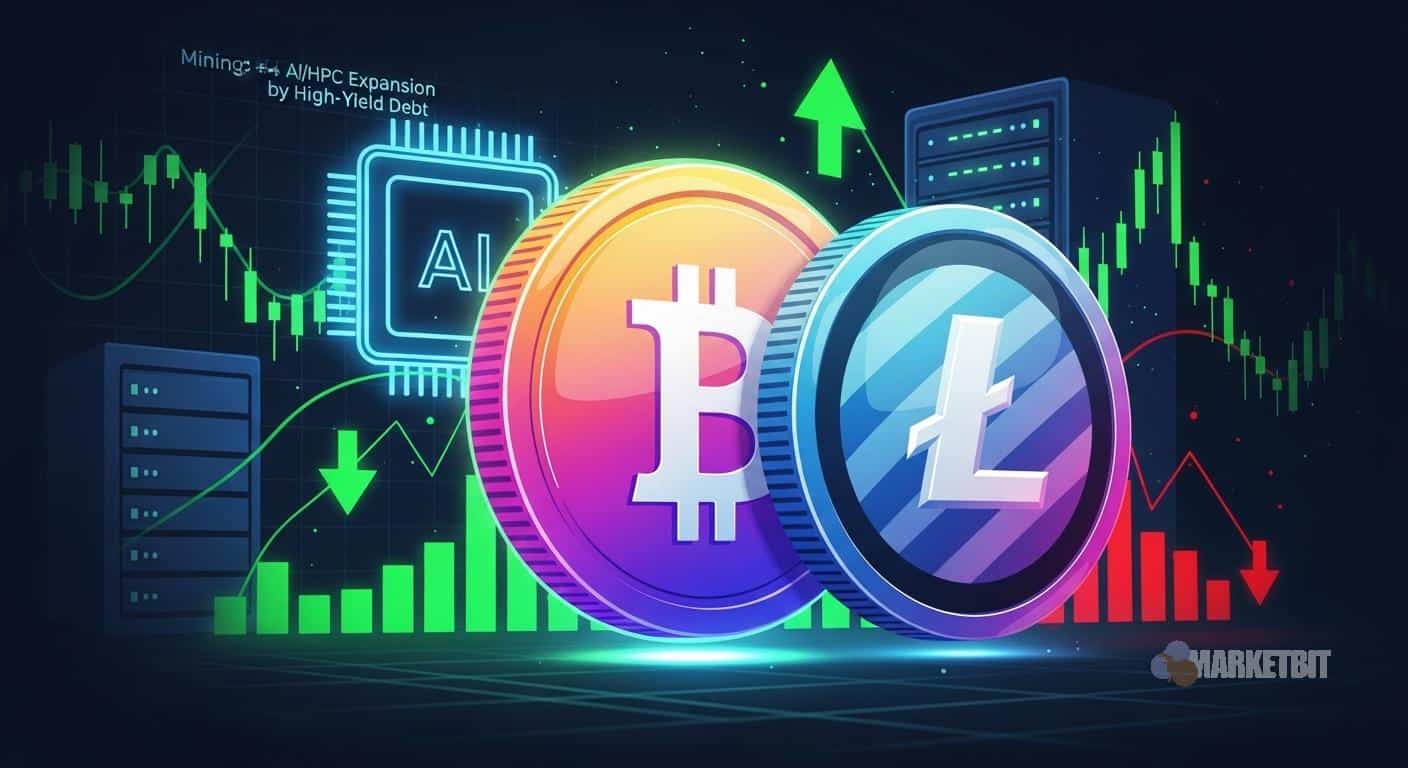
AI- and Bitcoin-linked data centers are leaning on high-yield debt to accelerate AI and high-performance computing build-outs, even as borrowing costs rise. According to TronWeekly, issuers across this niche have tapped roughly $33 billion of junk bonds, underscoring rapid expansion and risk pricing.
As reported by Cointelegraph, AI- and crypto-adjacent borrowers are paying about 7%–9% coupons on long-dated high-yield paper, versus roughly 4%–5% for traditional utilities. The spread reflects execution risk and balance-sheet cyclicality that lenders still classify as growth credit, not core infrastructure.
According to VanEck’s digital assets research team, aggregate miner debt expanded from roughly $2.1 billion to about $12.7 billion in a year, driven by AI/HPC infrastructure and newer rigs. The firm characterizes mining capex as a “melting ice cube” dynamic that pressures operators to refinance and reinvest to maintain share.
As reported by CoinDesk, structures span senior secured notes and convertibles, often with dilution risk and tight covenants. The outlet highlighted TeraWulf’s 7.75% coupon and estimated annual interest burden outpacing recent revenue, an illustration of coverage strain if AI/HPC ramps slip.
Investor appetite remains significant despite higher coupons. Gate.com reported a 6.5-times oversubscription for a Black Pearl Compute bond, pointing to demand for yield balanced against stringent terms.
For miners, AI/HPC expansion is a shift from volatile, price-dependent block rewards to contracted compute that can smooth cash generation. Longer-duration take‑or‑pay agreements and service-level terms, if secured, may support financing structures tied to predictable capacity payments.
Power availability, interconnection queues, and permitting timelines remain binding constraints for data centers. TheStreet relayed Bitdeer’s capital-markets view that easier U.S. rates would help finance rollouts while inflation risk could delay or reprice projects, emphasizing macro sensitivity.
Executives in adjacent compute businesses frame the pivot as margin-driven. “Bitcoin mining just doesn’t cut it anymore,” said Daniel Keller, CEO and co‑founder at InFlux Technologies. He argues miners with reliable power and operations are better positioned to capture AI workloads.
For listed miners such as Bitdeer and TeraWulf, the opportunity is to repurpose sites, power contracts, and operational discipline into sellable GPU capacity. The trade‑off is higher fixed charges, so interest coverage, contract enforceability, and delivery milestones become central to credit outcomes.
At the time of this writing, Bitcoin (BTC) trades near $65,632 with a “Bearish” sentiment reading and high 9.08% volatility, based on provided metrics. Such conditions may reinforce the appeal of contracted AI/HPC cash flows over purely mining‑linked exposure.
Disclaimer:
Marketbit.io provides cryptocurrency news, alerts, commentary, and entertainment content for informational purposes only. Nothing published on this site constitutes financial, investment, legal, or trading advice. Cryptocurrency markets are highly volatile and involve substantial risk, including the potential loss of capital. Always conduct your own research (DYOR) and consult with a qualified financial professional before making any investment decisions.