
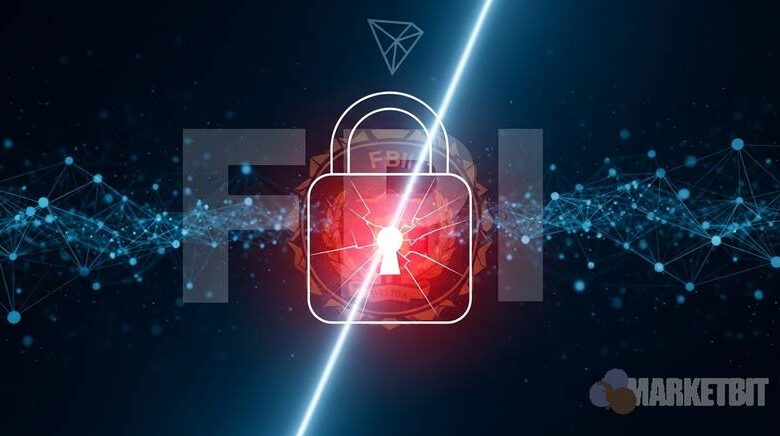
The FBI has issued a warning about fake cryptocurrency tokens designed to trick users into sending funds to the wrong addresses, but the official advisory does not single out Tron. A viral Telegram headline claiming the warning specifically targets Tron users overstates what law enforcement actually said, raising questions about how crypto security alerts get distorted as they spread through social channels.
What the FBI Actually Warned About
On April 26, 2024, the FBI’s Denver field office published a public warning about cryptocurrency token impersonation scams. The advisory described criminals creating fake tokens that mimic well-known assets such as USDT and other stablecoins.
The method described is known as address poisoning. Attackers send small transactions from wallet addresses that closely resemble legitimate ones, hoping victims will later copy the fraudulent address from their transaction history when sending real funds.
The FBI cited a Colorado-based victim who lost $2.1 million in a stablecoin investment scam involving impersonation tokens. The agency recommended that users check full wallet addresses before initiating transfers and use blockchain explorers to inspect suspicious tokens or addresses.
Critically, the official advisory references USDT and stablecoins broadly. It does not name Tron, TRX, or any Tron-based tokens as the specific target of the scam campaign.
Why the Tron Angle Is Getting Attention
The headline circulating on Telegram frames the FBI warning as though it was directed at Tron users specifically. Research into the claim found no official FBI, IC3, or Tron DAO statement confirming a Tron-only campaign.
That does not mean the risk is irrelevant to Tron wallet holders. Address-poisoning attacks exploit transaction history on any blockchain, and networks with low fees and high transaction volumes can be particularly attractive to scammers running these campaigns at scale. The ongoing policy debates around stablecoin regulation have also kept token safety in the spotlight.
Tron’s USDT activity is substantial. TRX traded at roughly $0.31 on March 21, 2026, with a market cap near $29.35 billion and 24-hour volume around $553 million. High stablecoin throughput on the network means more potential targets for impersonation schemes.
The broader crypto market mood adds context. The Fear and Greed Index sat at 12, deep in “Extreme Fear” territory. Periods of heightened anxiety tend to coincide with increased scam activity as users rush to move funds or react to alarming headlines, exactly the kind of behavior address poisoning exploits.
Address Poisoning Remains an Active Threat
The FBI warning may date to 2024, but the underlying scam technique has not gone away. In August 2025, security firms including Web3 Antivirus and ScamSniffer tracked more than $1.6 million lost to address-poisoning attacks in a single week.
Web3 Antivirus described the tactic directly: “Poisoners send small transfers from addresses that mimic a real one, so copying from history becomes a trap.” The simplicity of the attack is what makes it persistent. No smart contract exploit or protocol vulnerability is required.
The pattern has drawn comparisons to other social-engineering threats in crypto. Just as sudden price volatility can trigger impulsive trading decisions, fake token alerts exploit urgency and fear to push users into mistakes.
What to Know Before Moving Funds
WHAT TO KNOW
- Verify the full address. Never copy a destination address from your transaction history alone. Compare every character against the intended recipient, or use a saved contact or address book feature in your wallet.
- Inspect tokens before interacting. Use a blockchain explorer to check whether a token contract matches the official contract address listed on the project’s verified channels. Impersonation tokens often have identical names and symbols but different contract addresses.
- Report suspected scams. The FBI directs victims to file reports through the Internet Crime Complaint Center (IC3). Exchanges and wallet providers may also have fraud reporting channels that can help flag malicious addresses.
These steps apply regardless of which network you use. Whether you hold assets on Tron, Ethereum, or any other chain, the core defense against address poisoning is the same: verify before you send.
The high volume of token transfers across major networks means automated poisoning attempts can reach large numbers of wallets quickly. Users who regularly transact in stablecoins or move funds between exchanges and personal wallets face the highest exposure.
Separating Signal From Noise
The FBI’s token impersonation warning is real and its advice remains sound. What is not supported by the available evidence is the claim that law enforcement issued a Tron-specific alert.
Viral crypto headlines frequently compress or reframe official statements to generate urgency. In this case, the Telegram post appears to have narrowed a broad scam warning into a network-specific scare. Tron users should take the underlying security guidance seriously, but they should also verify the framing of any alert before acting on it.
The FBI’s recommendation to use blockchain explorers and check full addresses costs nothing and takes seconds. In a market environment marked by extreme fear, that small habit is one of the most practical defenses available.
Disclaimer: This article is for informational purposes only and does not constitute financial or investment advice. Cryptocurrency and digital asset markets carry significant risk. Always do your own research before making decisions.